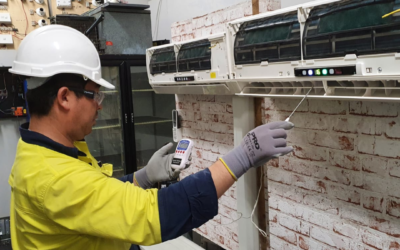

Searches for RPL for electricians and Recognition of Prior Learning electrical licence Australia are on the rise—and for good reason. Many experienced tradespeople want a faster pathway to formal qualifications. But there’s a growing misconception that a full qualification, such as a Certificate III in Electrotechnology Electrician, can be achieved entirely through RPL with little to no assessment. The reality is more complex—and more important.
Recent industry coverage, including reporting by the Electrical Trades Union of Australia and Australian Broadcasting Corporation, has highlighted concerns around providers issuing qualifications with minimal evidence or assessment. These practices not only undermine the integrity of the system but also place workers at risk in a high-risk, safety-critical industry like electrical.
At its core, RPL is designed to assess and recognise existing competency—not bypass it. A compliant RPL process requires clear, verifiable evidence and often includes practical demonstrations, technical conversations, and gap training where needed. In most cases, RPL can legitimately cover some units—typically foundational or experience-based components—but rarely an entire qualification without further training or assessment.
It’s worth asking a simple question: if a full qualification could be obtained purely through past experience with no structured training, why would apprenticeships exist at all? Apprenticeships are built to ensure electricians develop not just knowledge, but consistent, demonstrable, and safe competency across all required units.
There’s also a regulatory reality many applicants overlook. Licensing bodies and assessment authorities are increasingly alert to qualifications obtained entirely via RPL. If an applicant cannot confidently demonstrate their skills, they may be required to undertake further assessment—or even complete additional units—before being recognised or licensed. What seems like the “fastest” pathway can quickly become the longest.
At Superior Training Centre, our RPL process is designed to be fair, compliant, and rigorous. We recognise genuine experience and provide clear pathways to fill any gaps—ensuring that when a qualification is issued, it reflects real, industry-ready capability.
The takeaway is simple: the easiest pathway is not always the best one. In a trade where safety, compliance, and technical precision matter, cutting corners can have long-term consequences. We remain committed to delivering quality, credible training that supports both the individual and the integrity of the industry.